
 English
 Русский
GRID Autosport Android Review: Console-Quality Racing on Your Phone
Mobile racing games come in two varieties. There are the free-to-play arcade racers built around daily grind loops, battle passes, and microtransactions, and then there is GRID Autosport. Originally developed by Codemasters for PC and consoles in 2014, the game was ported to Android by Feral Interactive in November 2019, and the result is something the platform had never quite seen before: a genuine AAA racing title with no ads, no grinding, and no in-app purchases. You pay once and get everything.
What Is GRID Autosport?
GRID Autosport is a premium single-player racing game developed by Codemasters and published on Android by Feral Interactive. It is a direct port of the acclaimed PC and console release, carrying across the full career mode, all DLC content, 100 cars, and over 100 circuits. The Android version launched in November 2019 and requires Android 9.0 or higher along with 3.9 GB of free storage space. The game is supported on a specific list of devices including Google Pixel 2 and newer, Samsung Galaxy S8 and above, OnePlus 5T and above, and a range of others from Asus, HTC, Huawei, LG, Motorola, Nokia, Oppo, and Razer.
The game is priced at $9.99 as a one-time purchase, covering the complete package with all DLC included. There are no ads, no subscriptions, and no ongoing purchases required.
Gameplay: Simulation with Accessible Depth
GRID Autosport sits firmly in sim-cade territory, blending realistic handling physics with enough accessibility to bring in players who are not committed sim racers. The game was designed as a deliberate course correction after its predecessor, GRID 2, which critics and fans felt had leaned too far toward arcade accessibility. GRID Autosport restored the cockpit view, brought back serious handling physics across different car classes, and stripped away the narrator-driven career mode and superfluous menus that cluttered GRID 2.
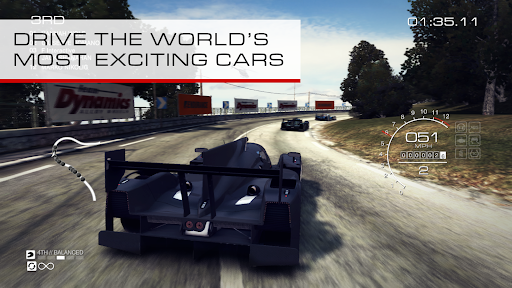
The core experience rewards clean laps, smart braking, and discipline-specific skills. Each car type handles noticeably differently. Open-wheel cars demand precise inputs and punish oversteer hard, while touring cars allow more aggressive door-to-door racing. Driving a stock car the same way you would an open-wheel machine will get you off the track fast. That variety in how different machines respond is one of the game’s strongest qualities.
The Flashback feature returns from previous GRID entries, letting you rewind a race by a few seconds if a mistake derails a clean run. Team radio adds another layer of immersion, with your race engineer providing updates on car damage, gap to the leader, rival positions, and teammate status. You can also direct teammates to attack, defend, or hold position during a race, adding a tactical element beyond simply driving fast.
Racing Disciplines
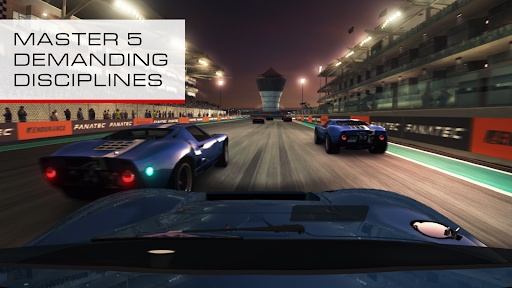
One of the things that sets GRID Autosport apart from most mobile racers is the breadth of its racing categories. Rather than building the entire game around a single race type, it spreads competition across eight distinct disciplines:
- Touring: Door-to-door circuit racing with production-based cars
- Endurance: Long-form races requiring consistent pace and strategy
- Open-Wheel: Single-seater formula-style racing
- Tuner: Modified performance cars on technical circuits
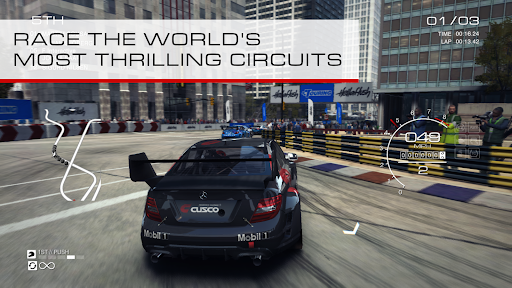
- Street: City-based racing on real-world locations including San Francisco, Paris, and Dubai
- Drift: Scored drift events rewarding style and angle
- Demolition: Smash-up derby events in enclosed arenas
- Drag: Straight-line acceleration races
Each discipline feels meaningfully different to drive, and rotating between them prevents the game from becoming repetitive across long sessions.
Career Mode
The Career mode runs on a season structure where you choose between team offers at the start of each season. Teams including Ravenwest, the series veteran returning from Race Driver: GRID, each come with different season objectives and sponsor targets. Hitting those goals earns bonus experience points on top of race result XP.
Real-world sponsors including Razer, Intel, and BMW appear as in-game partners, which gives the career a credible professional atmosphere. A training session before each race category lets you learn circuits before the main event, and video previews introduce several categories with a brief look at what to expect. The career is lengthy, and completing it properly is a significant time investment, which is part of what makes the $9.99 price feel fair.
Tracks and Locations
The track roster spans 28 real and fictional locations with over 130 circuit configurations. Real-world permanent circuits include Spa-Francorchamps, Brands Hatch, Mount Panorama, Indianapolis, Circuit of the Americas, Sepang, Red Bull Ring, and Yas Marina in Abu Dhabi. Street circuits bring in San Francisco, Paris, and Dubai using mostly real-world roads. Additional point-to-point tracks in authentic settings are included as DLC content, fully unlocked at purchase.
Difficulty and Controls
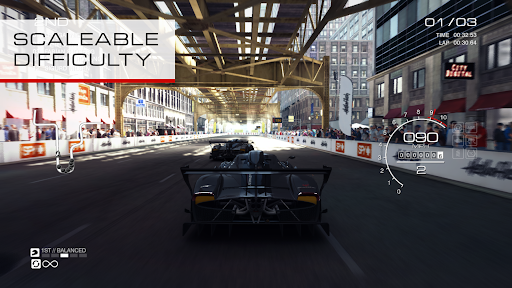
GRID Autosport makes a point of telling you early that it was designed to be difficult. Difficulty is scalable across four levels: Rookie, Professional, Veteran, and Master. Auto-accelerate is available on Rookie and Professional, but Veteran and Master remove both auto-accelerate and auto-brake, demanding full manual throttle and brake management from the driver.
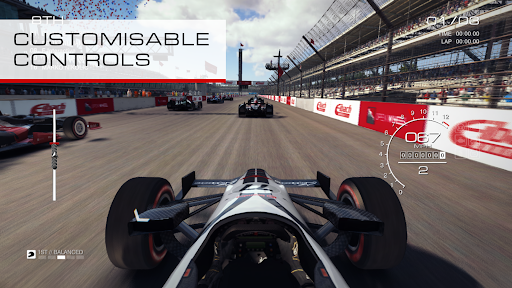
Four control input methods are available: Tilt steering, Wheel Touch, Arrow Touch, and Bluetooth gamepad. Each can be customized further to suit your preferences, and the gamepad option works cleanly with supported controllers, effectively turning the game into a console-grade experience when paired with hardware.
Custom Mode lets you build race events from scratch, selecting the track, weather, time of day, lap count, difficulty, and opponent pool, or randomize the setup entirely. It is useful both for casual racing outside the career and for learning specific circuits before tackling them competitively.
Visuals and Audio
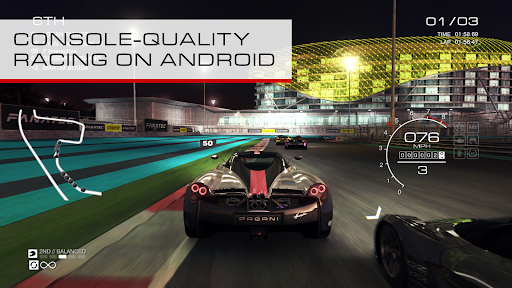
GRID Autosport looks genuinely impressive on supported Android hardware. Car models are detailed, environments are well-rendered, and the lighting in particular pushes well above what most mobile games deliver. An HD texture option is available for additional visual detail on capable devices. On current flagship hardware, the experience sits close enough to the original PC version that the difference is largely academic.
Audio quality matches the visuals. Engine sounds are meticulously recreated for each car class, and the team radio chatter during races adds ambient detail that makes the game feel like a simulation rather than a straightforward action racer. Battery drain and device heat are worth factoring in. Running the game at full visual quality draws heavily on the processor and will warm most devices during extended sessions. A battery saving mode reduces visual settings to ease the hardware demand, which is a sensible option for longer play away from a charger. Some users on supported devices report occasional frame-rate drops at maximum settings, though this varies by hardware.
Limitations Worth Knowing
A few practical limitations are worth flagging before purchasing. Load times run longer than typical for a mobile game, which is a function of the file size and rendering complexity. Rearview mirrors are absent and detailed interior dashboards are not present, though these are flaws carried over from the original console version rather than Android-specific issues. Race series progress does not save mid-series, so exiting the app partway through a series means losing your place and starting it again.
Online multiplayer is not available on Android. Feral Interactive ran a beta to assess feasibility and subsequently decided not to pursue it further. GRID Autosport is strictly a single-player and local split-screen experience on Android. The game’s online servers are also scheduled to shut down on March 16, 2026, which affects any server-dependent features.
Pricing and Value
At $9.99, GRID Autosport delivers a content volume and production quality that mobile racing games at any price struggle to match. The one-time purchase covers 100 cars, over 100 circuits, all eight racing disciplines, the full Career mode, Custom Cup, and all DLC. There are no ads, no energy meters, no premium currencies, and no paywalled features. That model is increasingly rare on Android and represents genuine value for the content provided.
Who Should Play GRID Autosport?
GRID Autosport is the right pick for Android users who want a serious racing experience without compromise. If you have played Gran Turismo or Forza on console and want something comparable on mobile, this is the closest the platform offers. The sim-cade handling is demanding enough to be rewarding but accessible enough through its difficulty scaling to bring in players who are newer to the genre.
It is less suited to players who want quick, casual sessions without much setup time. Load times are real, the difficulty curve requires engagement, and the game expects you to work with its systems rather than breeze past them. Players looking for an instant-action arcade racer will find other titles a better fit.
For anyone serious about racing games on Android, GRID Autosport has been the benchmark since 2019 and comfortably remains so.
Similar Racing Games
Players who enjoy GRID Autosport may also want to try Real Racing 3 for a free-to-play alternative with a large car roster, or Asphalt 9: Legends for a faster, more arcade-oriented experience. For players on PC or console looking to continue in the GRID series, a direct sequel titled GRID was released in October 2019 for PC, PlayStation 4, and Xbox One.